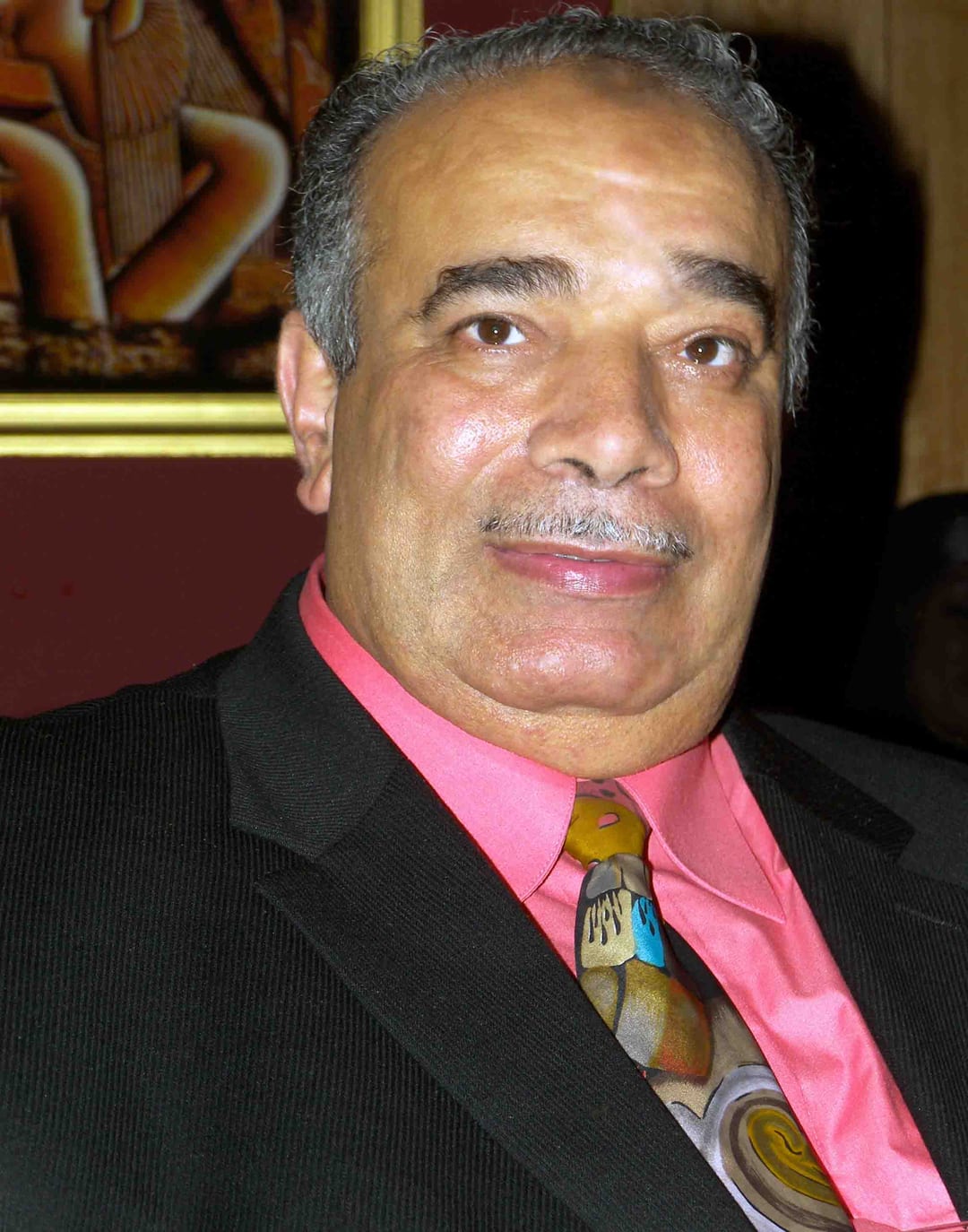
Ahmed Subhy Mansour
Scholar of Muslim history at Al-Azhar, dismissed in 1985 and expelled in 1987 for arguing that the Quran is sufficient on its own terms; granted political asylum in the United States in 2002; founder of the International Quranic Center. A factual account of a life in three countries and one project.
Timeline
- 1949
Born 1 March in Abu Hariz, Kafr Saqr, Sharqia governorate, Egypt. The household is observant and modest; education in the village mosque and primary school.
- 1973
B.A. in Muslim History, Al-Azhar University, Cairo — highest honors. Joins Al-Azhar's College of Arabic Language as an assistant teacher in the same year.
- 1975
M.A. in Muslim History, Al-Azhar — honors. Concentrates on Sufism and religious authority in Mamluk-era Egypt.
- 1980
Ph.D. in Muslim History, Al-Azhar — highest honors. Promoted to assistant professor; remains on the faculty for the next seven years.
- 1985
Discharged from Al-Azhar over the implications of his published work — Quran-only methodology, critique of canonical hadith, historicization of the early Islamic centuries.
- 1987
Tried by Al-Azhar's canonical court. Expelled definitively on 17 March. Arrested in Egypt on 17 November; held without conviction.
- 1988
A second arrest and short imprisonment in Egypt. Continues to write.
- 2001
Departs Egypt under continued political and judicial pressure.
- 2002
Granted political asylum in the United States. Reagan-Fascell Democracy Fellow at the National Endowment for Democracy; delivers the lecture "The Roots of Democracy in Islam" in December.
- 2003
Visiting fellow, Harvard Law School Human Rights Program.
- 2004
Founds the International Quranic Center as a non-profit dedicated to preserving and circulating Quran-only scholarship, supporting allied reformist work, and maintaining the public archive at ahl-alquran.com.
- 2005
Testifies before the U.S. Senate Judiciary Committee on 25 October — religious persecution and the legal architecture of state-enforced orthodoxy.
- 2009-2010
Crapa Fellow at the U.S. Commission on International Religious Freedom (USCIRF), researching progressive Islamic thought as grounded in classical sources.
- 2010-2011
Fellow at the Woodrow Wilson International Center for Scholars. Testifies before the U.S. House Permanent Select Committee on Intelligence on 13 April 2011 — the political theology of Salafism and the Muslim Brotherhood.
- Today
Continues to publish from the United States. The corpus on ahl-alquran.com is mirrored and preserved by this library.
“The text was given complete. What followed — schools, methods, controversies — was the response of human communities, and must be read as such.”
The Quran & Its Sufficiency · 2003 · ch. 4
Thematic arcs
Early scholarship — Mamluk-era Egyptian religious history
The earliest sustained work was a doctoral dissertation, later published as a monograph, on the institutional structure of Sufism in Mamluk-era Egypt — the relationship between Sufi orders, the Mamluk state, and the formal religious establishment. The methodology was already historicist: read the institutions on their own terms, in their own century, with their own sources.
The reform program — Quran-only methodology
The break with Al-Azhar's consensus came not from a single book but from a position that consolidated across the early 1980s. If the Quran was given complete — and if its self-description as the sole source of binding guidance is read at face value — then the canonical hadith corpus, the schools of fiqh, and the entire apparatus of post-prophetic religious law occupy a different epistemological status. They are human work, the response of communities to the text, and they must be read as history.
This is not an attack on faith or tradition; it is an argument about authority. The position is sometimes called Quranist, sometimes "People-of-the-Quran" (Ahl al-Quran). The website that hosts the older corpus takes its name from this current.
Exile and recognition — fellowships and testimony
The decade following asylum in 2002 brought formal recognition from American institutions that the Egyptian state had withheld: NED, Harvard, USCIRF, the Wilson Center. The fellowship outputs themselves are catalogued on the Testimony page and overlap with his congressional testimony on religious persecution and on the political theology of Salafism.
The intellectual legacy — corpus and current
143 books, more than 5,000 articles, nearly 7,000 fatwas, and over 1,700 recorded talks — a body of work that crosses Arabic and English and addresses readers in two contexts at once. The point of the library is not to fix this work in place but to make it durable: every link will resolve, every text will be readable, ten years from now and longer.