About the library
A permanent digital archive of the writings of Dr. Ahmed Subhy Mansour — bilingual, free to read in perpetuity, stewarded by the International Quranic Center.
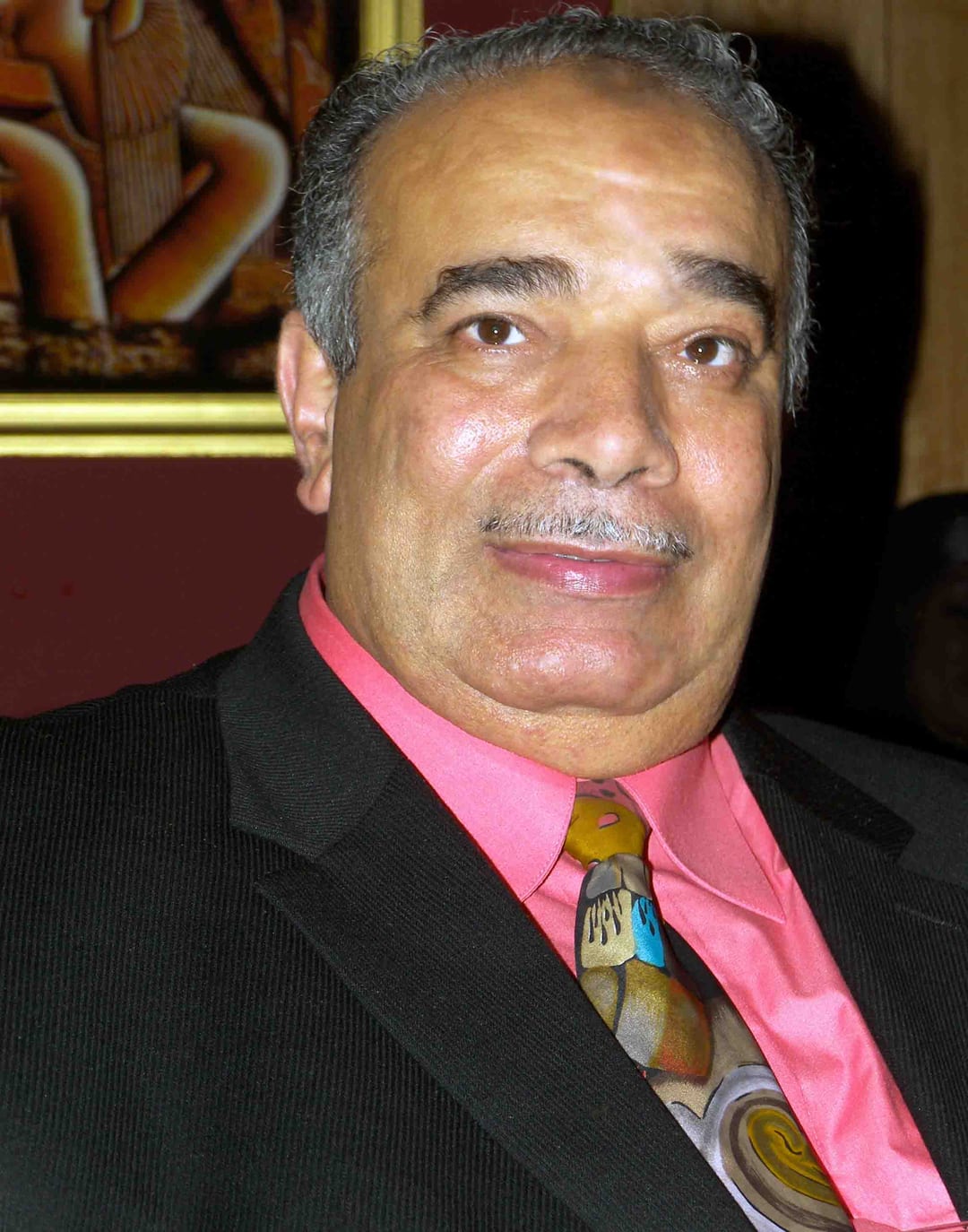
The author
Ahmed Subhy Mansour was born on 1 March 1949 in the village of Abu Hariz, in the Kafr Saqr district of the Sharqia governorate, Egypt. He completed his Bachelor's, Master's, and Doctorate in Muslim history at Al-Azhar University between 1973 and 1980, each degree taken with the highest honors. He joined Al-Azhar's faculty the same year he finished his doctorate and taught there as an assistant professor for the next seven years.
His first monograph — a study of Sufism and religious authority in Mamluk Egypt — was already moving against the grain of Al-Azhar's institutional consensus. By the mid-1980s, his published work had reached a position that the institution would not tolerate: the Quran, read on its own terms, is the only binding source of Islamic law, and the canonical hadith corpus is a later sedimentation of political and theological interests. He was dismissed in 1985, tried by Al-Azhar's canonical court, and expelled in March 1987. He was imprisoned in Egypt later that year, and again in 1988.
Mansour received political asylum in the United States in 2002. He held a Reagan-Fascell Democracy fellowship at the National Endowment for Democracy that year, a visiting fellowship at Harvard Law School's Human Rights Program in 2003, the Crapa Fellowship at the U.S. Commission on International Religious Freedom from 2009 to 2010, and a fellowship at the Woodrow Wilson International Center for Scholars from 2010 to 2011.
The intellectual project
Mansour's lifelong argument is that the Quran was given complete, and that the corpus of hadith, sunna, and classical jurisprudence accumulated around it represents the response of human communities — political, sectarian, scholastic — rather than divine instruction. His method is textual and historical: read the Quran with its own internal logic, and read the post-prophetic centuries as history.
Around that core, his writing addresses Islamic legal reform, the politics of apostasy and Hisbah, women's rights in Muslim societies, the historical record of early Islamic political conflict, and the contemporary critique of Wahhabism, Salafism, and political Islam. The position is sometimes called Quranist or "People-of-the-Quran" (Ahl al-Quran); the website that hosts his older corpus, ahl-alquran.com, takes its name from this current.
“The text was given complete. What followed — schools, methods, controversies — was the response of human communities, and must be read as such.”
The Quran & Its Sufficiency · 2003 · ch. 4
The International Quranic Center
The International Quranic Center is the non-profit body that preserves and circulates Dr. Mansour's writings and supports allied reformist work in Islamic thought. Its board includes Muslim, Christian, and Jewish members — inter-faith composition is part of its constitution, not a gesture.
The Center maintains the original site at ahl-alquran.com, which has been continuously online for more than two decades. This library is the Center's archival project: a clean, durable reading surface for the same corpus, designed to outlive the original host.
About this site
Every URL in this library is durable. The numeric ids used in the original site are preserved, and any URL that resolves today will resolve in ten years. The site is non-commercial, carries no advertising, and accepts no donations; it is funded as a memorial, with no monetization layered on top of the reading experience.
The work is the subject. The archive is the steward.